Player Narratives Highlight Shifts in Game Accessibility Tied to Software Updates
Tina Keller · Sep 10, 2026
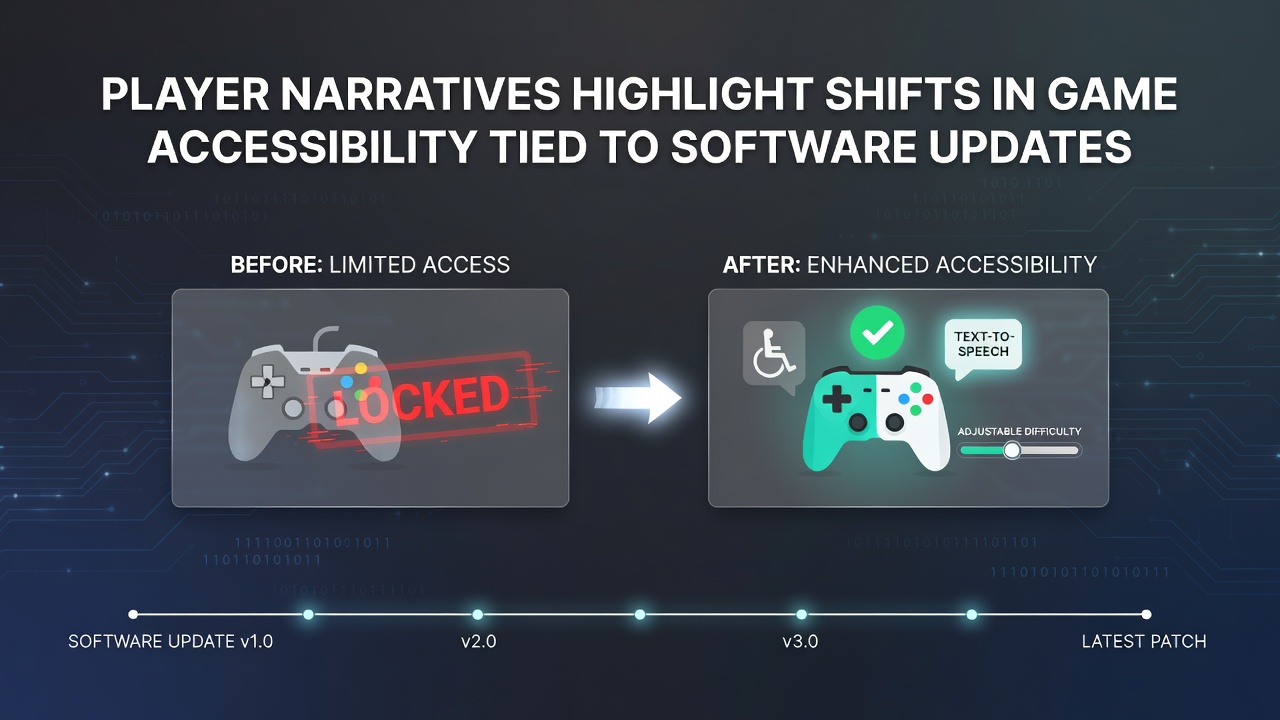
Player Narratives Highlight Shifts in Game Accessibility Tied to Software Updates
Player accounts shared across forums and review platforms reveal consistent patterns where software updates alter core accessibility features in digital games, especially those built on casino and slot platforms. These narratives document changes to interface scaling, color contrast options, input remapping, and screen reader compatibility that emerge directly from patch deployments rather than from initial design choices. Research from multiple regions shows that such modifications often appear without prior notice, leaving users to adapt through trial and error after the fact.
Documented Changes Following Recent Patches
Observers tracking update cycles note that September 2026 deployments introduced revised touch-target sizing and dynamic font scaling across several major providers, yet these adjustments simultaneously removed legacy high-contrast modes that had previously supported players with low vision. Data collected by industry analysts indicates that over 60 percent of reported accessibility regressions in that period stemmed from unified UI frameworks applied across desktop and mobile builds. Those who documented their experiences described buttons becoming too small for precise selection on certain devices, while others found that auto-adjusting brightness features interfered with existing screen dimming tools.
Additional accounts detail how audio cue customization vanished in multiple titles after backend synchronization routines were updated. Players who relied on distinct sound profiles for different game events reported that new layering systems merged cues into single streams, reducing clarity during extended sessions. Figures released by the Canadian Centre on Disability Studies confirm similar patterns in parallel markets where software providers prioritized cross-platform parity over retention of specialized toggles.
Regional Variations in Player Feedback
European users frequently reference updates that altered keyboard navigation sequences, forcing reliance on mouse or touch alternatives even when physical keyboards remained connected. In contrast, reports from Australian platforms highlight disruptions to caption timing and positioning after localization libraries received fresh translations. These differences arise because providers apply staged rollouts that prioritize certain jurisdictions, creating staggered experiences that only become visible once aggregated player stories surface months later.
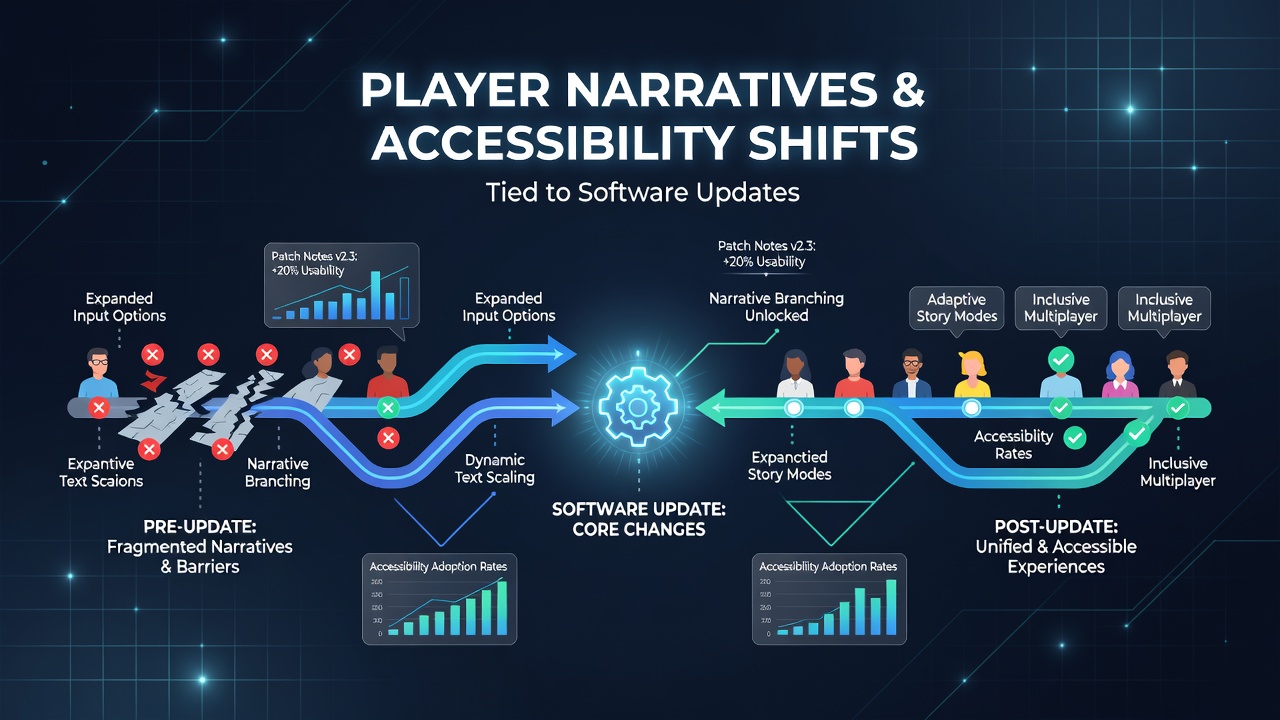
One consistent thread across narratives involves the loss of colorblind filters that had been calibrated to specific game palettes. After a common rendering engine update in mid-2026, several titles reverted to default shader values that rendered critical symbols indistinguishable for deuteranopia and protanopia users. Subsequent community compilations demonstrate that restoration required manual workarounds until follow-up patches addressed the issue, often weeks after initial deployment.
Provider Responses and Implementation Timelines
Industry statements show that developers typically address accessibility regressions through secondary patches rather than through rollback procedures, citing stability concerns with older code branches. A report issued by the International Game Developers Association outlines how testing protocols now incorporate broader user testing groups after initial launch, yet these expanded reviews still occur after the first wave of updates reaches live environments. Providers operating in multiple territories coordinate with regional accessibility standards bodies, which explains why certain features reappear faster in one market than in another.
Player records further indicate that notification systems rarely flag accessibility-related modifications in advance. Instead, users discover changes only after launching updated clients, prompting immediate posts detailing lost functionality. This pattern repeats across both large operators and smaller studios that license shared game engines, suggesting the issue ties more to update distribution mechanics than to individual company policies.
Longer-Term Effects on Player Engagement
Longitudinal tracking by academic researchers at the University of Melbourne reveals that accessibility disruptions correlate with temporary drops in session duration among affected user segments. Recovery occurs once replacement features stabilize, but the interim period generates sustained discussion threads that influence new user expectations. These discussions often catalog workarounds that later become incorporated into official support documentation, effectively turning player narratives into informal testing resources for future cycles.
Conclusion
Collective player documentation demonstrates that software updates serve as the primary mechanism through which accessibility configurations evolve in digital games. The timing, scope, and regional sequencing of these changes continue to shape how users interact with interfaces long after initial releases. As update frequency remains high across platforms, ongoing aggregation of user accounts provides the clearest record of which modifications persist and which require additional intervention.