Behind the Scenes: How Software Providers and Payment Systems Collaborate to Enhance Mobile Casino Experiences
Vera Carter · Aug 23, 2026

Behind the Scenes: How Software Providers and Payment Systems Collaborate to Enhance Mobile Casino Experiences
Software providers develop the gaming platforms and titles that run on mobile devices, while payment systems manage the financial transactions that support those platforms. These two sectors work together through technical integrations that allow players to move money quickly and securely during gameplay sessions. Data from industry reports shows that mobile casino usage has grown steadily, with operators relying on API connections to link game engines directly to transaction processors.Core Functions of Software Providers in Mobile Environments
Companies such as NetEnt and Playtech create game software that must operate across various operating systems and screen sizes. These providers design code that handles real-time graphics rendering, random number generation, and user interface elements optimized for touch controls. Researchers at the University of Nevada have documented how software frameworks reduce latency by pre-loading assets during initial app launches, which improves responsiveness when users switch between game lobbies and active sessions.
Payment integration begins at the development stage, when software teams embed hooks for external processors. These hooks let payment gateways trigger confirmations inside the game window without forcing users to exit the application. Observers note that this approach maintains session continuity, since players remain immersed while deposits or withdrawals process in the background.
Payment Systems and Their Technical Requirements
Payment networks including Visa, Mastercard, and regional processors like iDEAL in Europe handle authorization, settlement, and compliance checks for each transaction. These systems must meet standards for encryption and fraud detection that align with the software providers' security protocols. Studies from the Australian Institute of Criminology indicate that joint testing between payment firms and game developers reduces transaction failure rates by synchronizing timeout settings and error handling routines.
Integration Processes and Data Exchange Protocols
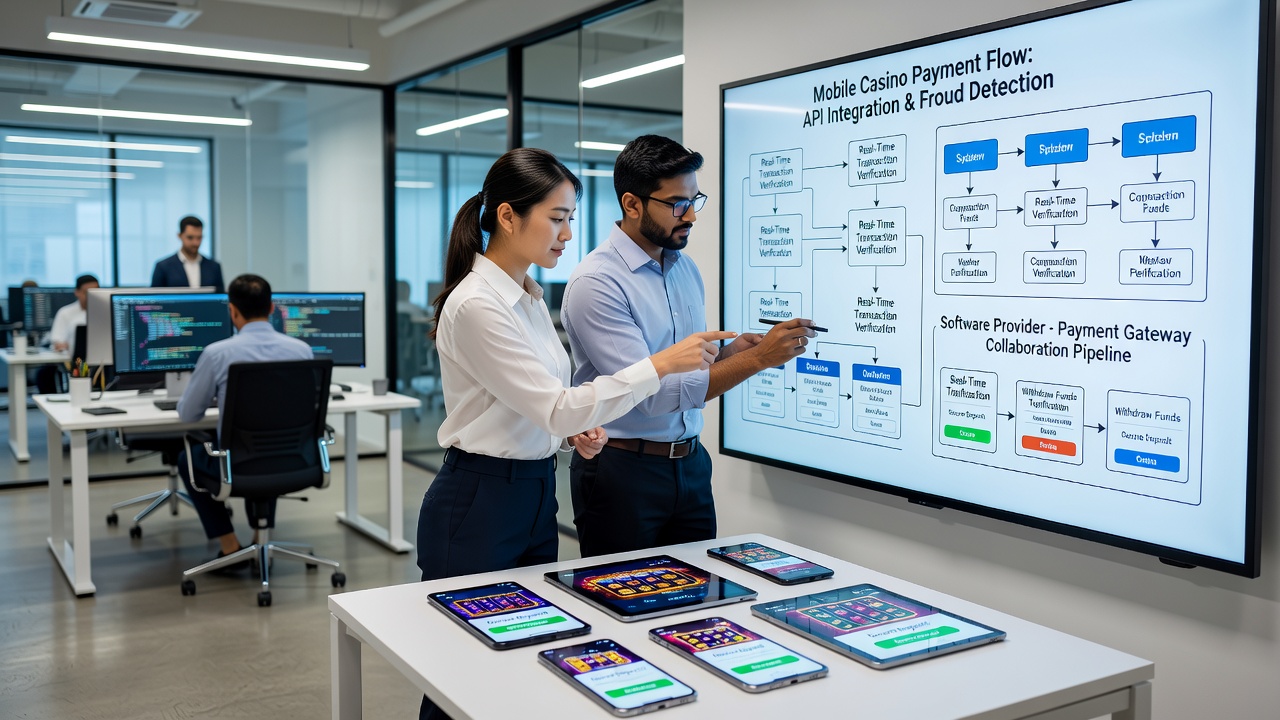
Collaboration occurs through standardized APIs that transmit player identification, transaction amounts, and status updates between the two systems. Software providers supply documentation that specifies data formats, while payment companies define response codes for approvals or declines. In August 2026, several platforms plan to adopt updated OAuth 2.0 flows that shorten authentication steps for returning users on mobile devices.
Those who manage these connections often run joint sandbox environments where teams simulate high-volume traffic to identify bottlenecks. Figures from the Nevada Gaming Control Board reveal that coordinated load testing has supported average deposit times under three seconds across major operators during peak hours.
Security Measures Developed Through Joint Efforts
Encryption standards such as TLS 1.3 protect data in transit between mobile apps and backend servers. Software providers embed device fingerprinting tools that payment processors use to flag suspicious patterns before funds move. According to a report from the European Gaming and Betting Association, shared threat intelligence databases have helped identify coordinated fraud attempts across multiple jurisdictions since 2024.
Tokenization replaces sensitive card details with unique identifiers that both parties store separately. This method limits exposure if one system experiences a breach. Those who implement these measures report fewer chargebacks because payment systems can validate tokens against game session logs in real time.
Mobile-Specific Enhancements from Collaboration
Touch-optimized payment buttons appear directly in game interfaces, allowing one-tap deposits that reference pre-approved limits set by the user. Software providers adjust screen layouts dynamically based on transaction status messages received from payment gateways. Data shows that operators using these combined features maintain higher session durations compared to those relying on separate external browsers for payments.
Push notifications triggered by payment confirmations alert players when funds become available for play. Payment companies supply the timing parameters, while software teams integrate the alerts into notification centers on iOS and Android. In regions where instant bank transfers dominate, these notifications help users resume games without manual balance refreshes.
Regulatory Compliance Across Different Regions
Operators must satisfy requirements from bodies such as the Nevada Gaming Control Board and Malta's gaming authority when deploying integrated systems. Software and payment teams conduct parallel audits that verify both game fairness and financial record-keeping. Compliance documentation includes logs of every API call, which regulators review during licensing renewals.
Cross-border transactions add another layer because currency conversion and tax reporting differ by jurisdiction. Joint teams develop modules that apply the correct rules based on player location data collected at login. Research from Canadian academic sources indicates that automated compliance checks cut manual review time by approximately 40 percent in tested deployments.
Conclusion
The partnership between software providers and payment systems rests on shared technical standards, synchronized testing, and ongoing data exchange. These elements combine to deliver mobile casino sessions that load quickly, process payments reliably, and meet regulatory expectations. As platforms prepare for updates scheduled in August 2026, the focus remains on refining these connections to handle increasing volumes of mobile traffic while maintaining security and speed.